- Apr 25
O-Level Oral: How to Ace the Planned Response
- Jemmies Siew
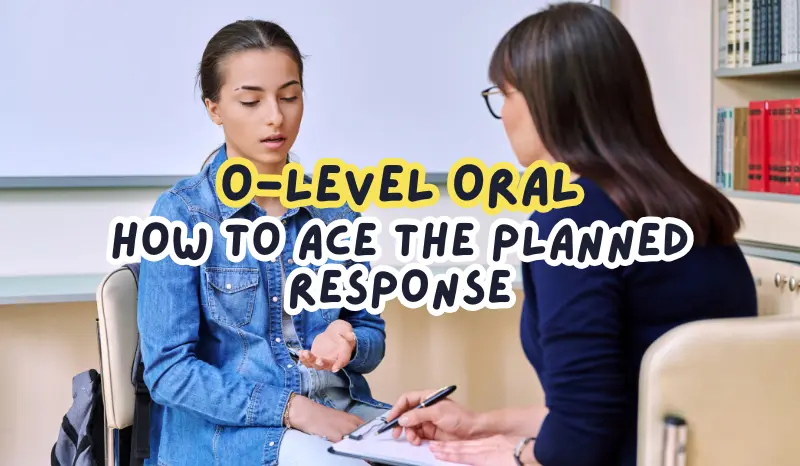
The O Level English Paper is a comprehensive test of your language skills, but few components feel as high-pressure as the Oral Communication. Specifically, the Planned Response—a 15-mark section—can be the difference between a B3 and an A1. At our Secondary English Tuition in Singapore, we see many students struggle with the 10-minute prep window. However, with the right strategy, you can turn those ten minutes into a high-scoring performance.
What exactly is the Planned Response?
Think of the Planned Response as a mini-speech. You will watch a short video clip (approximately one minute long) and then receive a specific prompt related to the visual stimulus. You are given 10 minutes to analyse the clip, brainstorm your points, and organise your thoughts into a 2-minute presentation. Unlike a casual conversation, this task tests your ability to think critically and deliver a structured, persuasive argument on the spot.
The Gold Standard: Assessment Criteria
To ace this component, you must understand how examiners grade you. They look for three main pillars:
1) Idea Development & Organisation: Are your points logically linked? Is there a clear beginning, middle, and end?
2) Expression of Ideas: Do you use a wide range of vocabulary and varied sentence structures?
3) Delivery: This is about your “stage presence”: your pace, tone, eye contact, and enunciation.
Identify Your Question Type
Common O Level Essay Questions often mirror the Oral prompts, which generally fall into three categories:
1) Personal: “How would you feel if you were in this situation?”
2) Community: “How can schools or neighbourhoods encourage this behaviour?”
3) Global/Societal: “Is this a growing problem in modern society?”
Recognising the “level” of the question helps you tailor your English enrichment for secondary school training to provide the right depth of evidence.
The Winning Strategy: Use P.E.E.L.

Use point-form notes to build a PEEL structure:
– Point: Directly answer the prompt in your very first sentence.
– Evidence: Reference 2–3 specific details you observed in the video (e.g., “The elderly man’s frustrated expression suggested…”).
– Explanation: Elaborate on why those details support your main point.
– Link: Tie your ideas back to the question or a personal experience to show depth.
Mastering the Clock
Your delivery should be steady and clear, aiming for an average length of 2 minutes (roughly 240–360 words). Spend your first 5 minutes of prep on the “What” (the PEEL structure) and the final 5 minutes on the “How” (rehearsing your opening and closing statements).
If you find yourself finishing too early, it usually means you’ve missed the “Personal Application.” Adding a short anecdote about a time you experienced something similar can help you reach that 2-minute sweet spot.
By mastering these techniques, you ensure that your O Level English journey is defined by confidence rather than anxiety.
Take the Next Step Toward Your Distinction
Mastering the O Level English Paper requires more than just memorisation; it demands strategic, hands-on practice under expert guidance. At WRITERS AT WORK, we empower students to transform their oral performances from hesitant to high-scoring. Whether you are looking to master the latest O-Level Oral Topics or want to sharpen your skills with a comprehensive bank of Past-Year O-Level Oral Questions, our curriculum is designed to give you a competitive edge. Don’t leave your results to chance. Explore our Secondary Programmes to find the right fit for your academic journey. Secure your spot today and start writing your own success story.
Frequently Asked Questions (FAQs)
Qn. 1. What is the most important part of the O-Level English Oral exam?
While every component matters, the Planned Response carries significant weight (15 marks) because it assesses your ability to organise complex thoughts under time pressure. Success depends on demonstrating strong Idea Development, clear Expression, and a confident Delivery that engages the examiner.
Qn. 2. How long should my Planned Response actually be?
You should aim for a presentation that is approximately 2 minutes long. A well-paced response typically ranges between 240 to 360 words; going too short may suggest a lack of depth, while going too long might lead to the examiner cutting you off before you reach your conclusion.
Qn. 3. Can I use a script during the 10-minute preparation time?
It is highly recommended that you do not write a full script. Instead, use the 10 minutes to map out your structure using point-form notes. This allows for a more natural, conversational flow and ensures you can maintain better eye contact with the examiner, which is a key part of the delivery criteria.
Qn. 4. What happens if I can't relate to the video prompt personally?
If you lack a direct personal experience, use the PEEL framework to link the video’s themes to general knowledge or community issues. You can discuss what you have observed in Singapore society or news reports to show depth and critical thinking. At WRITERS AT WORK, we train students to use “exam-ready” phrases to bridge these gaps smoothly.

Article Written By
Agnes Ng
Agnes Ng, Co-Founder and Teaching & Curriculum Director of WRITERS AT WORK. An NUS Honours graduate and published author with over 30 years of experience, Agnes has been the architect of the organization’s student-centric curricula since 2012.
Dedicated to teacher mentorship and academic excellence, she has guided hundreds of students to achieve outstanding results. Her expertise and commitment to high-quality education remain the cornerstone of WRITERS AT WORK’s success in empowering every learner.